Private vs Public Bike Share
The number of American cities offering bike share has grown from a small handful in the 1990s to over 800 by 2015, with more than 1,000,000 bikes in use. Car-dependent regions have a growing interest in bikeshare as part of broader strategies addressing congestion, air and noise pollution, safety, climate change and physical health.
In recent years, bikeshare has changed from a service usually provided by the public sector, to "big business" with the entrance of multiple multinational corporations. I was interested in exploring the differences between private and public bikeshare options across the globe and how their models differ. I found a few differences:
Docked vs Dockless
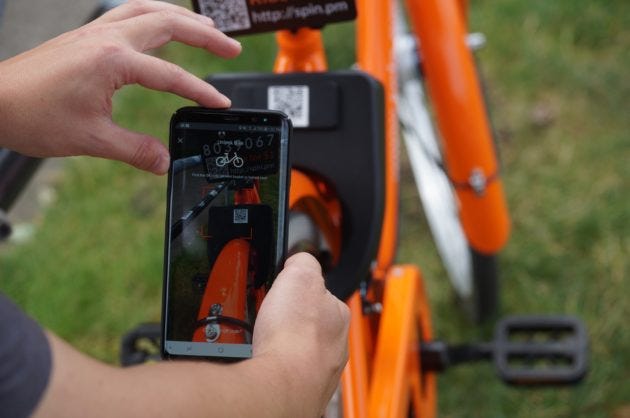
Public bikeshare has been the norm in the US - most older bikeshare systems were procured by their local city agencies. These systems are dock-based, but there's variation in the operators, funders, and sponsors of city bikeshare equipment. Most privately-operated bikeshare options are completely dockless, with private operators who own all their own equipment.
Pricing
In 2017, Streetsblog asked if private dockless bikeshare was a "blessing or a curse," noting how poorly-made the bike were but also praising how much cheaper the private bikes were compared to Metro Bikeshare. A 2018 Citylab article by a former city bikeshare manager notes that the cost of traditional bikeshare bicycles is usually much higher than dockless bikes - the bicycles themselves are more expensive, and cities also must cover costs of docking stations. This leads to many public sector bikeshare options being priced higher than private sector counterparts - especially when private operators have millions of VC money to burn.
Distribution
Pricing affects how many bikes can be deployed in a city. NACTO recommends to place bikeshare stations no more than 0.4 miles from eachother, which can be very expensive with a docked system. Private dockless bikeshare can avoid that issue and deploy anywhere there is interest - as long as there are people willing to move the bikes back in the middle of the night.
How can cities with public bikeshare systems take advantage of the benefits of dockless systems without abandoning existing bikeshare or depending totally on private operators? Regulations limiting fleet size can be one mechanism, as well as demanding data from the operators (like Los Angeles is doing with LADOT's MDS).


Comments
Post a Comment