Panicking startup moves, or what's next in micromobility?
 |
| The Bird One. Would you pay $1,299 for one? |
In recent months, Bird has experimented with a variety of different ownership and rental models and has introduced new scooter stock. The Bird Zero and One are intended to be longer-lasting, durable scooters. Bird has also advertised day-long rentals in which the company will bring a scooter to you. And it’s also started to offer the Bird One model as a $1,299 purchase, with guaranteed service for repairs and some service in case of theft. And now, the company announced a sit-down model for rent called the Cruiser, which seats two on a moped-style device.
 |
| A mock-up of the Bird Cruiser model, sans pedals. |
The irony, perhaps, is that some of these ideas might truly address a few of the structural issues in e-scooter sharing dockless provider models.
Anecdotally, I do see some additional demand for private e-scooters, likely spurred by the visibility of scootershare. But Bird’s brand, and the service amenities it offers with Bird One, doesn’t seem strong enough to warrant a massive price increase over comparable scooters, which can be as cheap several hundred dollars. The more durable models of scooters, though, directly addresses problems with device longevity, safety, and battery power. Larger batteries means less time and money invested in sending chargers around, and improved device longevity will aid in the unit economics needed to turn a profit.
The Cruiser model imitates some of moped-style scooter that Wheels has used, which appear more stable than a standing scooter. Bird’s press release also boasts pedal-assist power, similar to an e-bike like Jump’s popular fleet, but renderings don’t show conventional pedals at all. And the ability to have two people ride responds to a lot of user agreement-violations when multiple people try to pack on to one scooter.
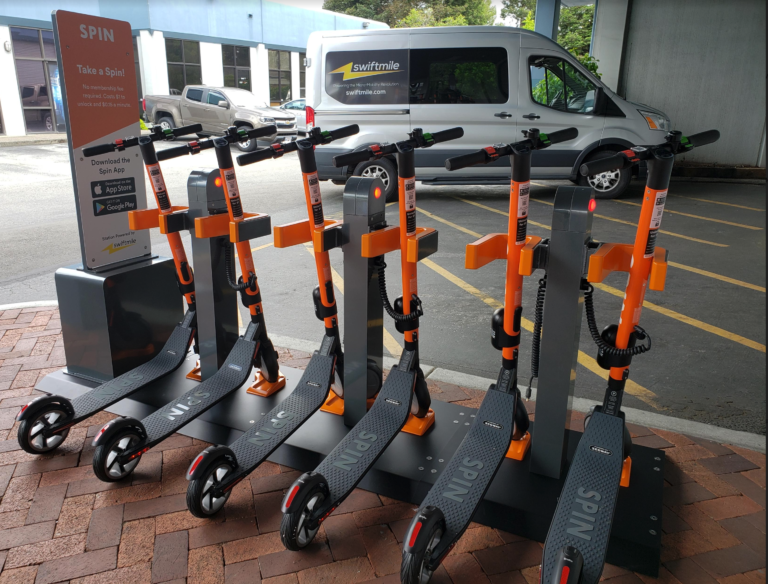 |
| A solar-powered Swiftmile dock pilot in DC, being used by Spin scooters. |
But what about other models for infrastructure and rentals that might be harder for a company tight on cash to monetize? Charging docks appear to be a major street infrastructure element that could reduce the need for expensive charging trips/collection in the long run. A company called Swiftmile creates on-street charging ports for scooters, which could accommodate a number of brands depending on how a city wants to install them. These have the benefits of eliminating charging trips, running on solar power, and arranging a scooters out of the way on the sidewalk.
But on-street infrastructure like this requires individual permits and bureaucratic coordination, which may not mesh with Bird's agile-like attempts to find new models of profitability in the short term.


I was unaware of swiftmile, but this type of development underscores the need for hardware standards so that scooters and other devices of various brands are compatible with city-deployed on-street charging ports.
ReplyDelete